
Chicken Pot Pie with Homemade Crust
A chicken pot pie with a homemade butter crust and a thick, creamy chicken, carrot, celery, and pea filling that slices cleanly.
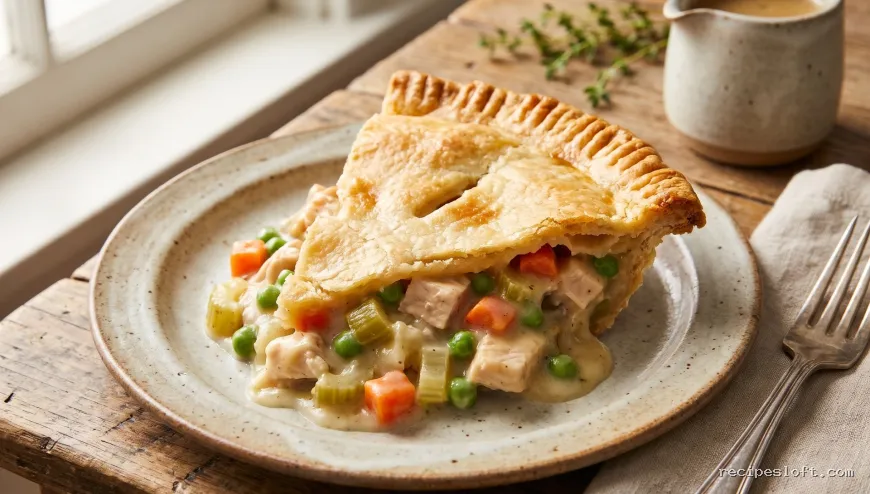
Cook this recipe
Chicken Pot Pie with Homemade Crust
Instructions
Make the dough
Cook the vegetables
Build the roux
Thicken the filling
Add the chicken and peas
Assemble the bottom crust
Top and seal the pie
Bake the pie
Rest before slicing
Share this recipe
Loved this recipe? Share it with someone who’ll enjoy it.
Cooking guide
Cooking tips and techniques
This chicken pot pie recpe uses a homemade butter crust and a thickened chicken-and-vegetable filling, so each slice holds together instead of running onto the plate. The dough comes together in about 10 minutes, chills while you build the filling, and bakes into a golden, flaky shell around tender chicken, carrots, celery, and peas.
Explore more practical ideas in our chicken casseroles and comfort bakes.
How to Make a Pot Pie Crust That Bakes Up Flaky
A flaky crust depends on keeping the butter cold and handling the dough as little as possible. Cut cold, cubed butter into the flour and salt until the pieces look like small peas rather than a smooth paste; those unmelted butter bits are what create flaky layers in the oven. Add ice water one tablespoon at a time, mixing just until the dough holds together, then divide it in two, flatten each half into a disk, and chill for at least 30 minutes before rolling. Cold dough rolls out cleanly and shrinks less once it hits a hot oven.
Rolling and Fitting the Dough
Roll each disk on a lightly floured surface from the center outward, turning the dough a quarter turn between passes so it stays an even circle. Fit the bottom crust into the pie dish without stretching it, since stretched dough tends to shrink back during baking.
Choosing the Right Chicken for This Recipe
Either poached chicken breast or shredded rotisserie chicken works well in this filling, as long as the meat is already fully cooked and shredded into bite-sized pieces before it goes into the sauce. Smaller, evenly sized pieces distribute better through the filling and make each slice easier to cut. If you are cooking raw chicken specifically for this pie, cook it to an internal temperature of 165°F (74°C) before shredding and adding it to the sauce. For more baked chicken dinner ideas built around a similar pantry, see this guide to Chicken Casserole Recipes: A Guide to Rice, Noodle, and Stuffing Bakes.
Getting a Thick Filling Instead of a Runny One
A thick filling comes from properly cooking the flour-based roux before adding liquid. Once the vegetables are softened, sprinkle the flour over them and stir it around for about a minute so it loses its raw taste, then slowly whisk in the broth and milk so no lumps form. Let the sauce simmer, stirring occasionally, until it visibly coats the back of a spoon before you stir in the chicken and peas; a filling that looks thin in the pot will not thicken further once it's sealed under the crust.
Avoiding a Soggy Bottom Crust
A soggy bottom crust is usually caused by pouring hot, thin filling into unbaked dough. Let the filling cool for a few minutes off the heat so it's thick and warm rather than bubbling hot before you spoon it into the crust, and bake the pie on a preheated baking sheet so the bottom gets direct, steady heat from the moment it enters the oven.
Storing and Reheating Chicken Pot Pie
Cover and refrigerate leftover pie for up to 4 days. Reheat individual slices in a 350°F oven or in the microwave until the filling reaches 165°F (74°C) on an instant-read thermometer, which keeps the crust from drying out while making sure the filling is reheated safely all the way through.
Common Chicken Pot Pie Recpe Mistakes to Avoid
- Skipping the dough chill, which leads to shrinking and a tough, greasy crust.
- Undercooking the roux, which leaves a thin, watery filling.
- Pouring hot filling straight into the crust, which causes a soggy bottom.
- Forgetting vents in the top crust, which traps steam and can make the crust soft instead of crisp.
Safe internal temperatures in this recipe follow the FoodSafety.gov safe minimum internal temperature chart.
Helpful answers
Frequently Asked Questions
Can I use a store-bought crust instead of homemade?
Yes, a refrigerated pie crust works if you want to skip the homemade dough step, and the filling and baking time stay the same.
Can I use rotisserie chicken?
Yes, shredded rotisserie chicken is a quick substitute for poached chicken breast in this filling.
Why is my filling runny instead of thick?
The flour likely wasn't cooked long enough with the butter before adding liquid, or the sauce wasn't simmered long enough to thicken before it was poured into the crust.
How do I store and reheat leftovers?
Refrigerate covered for up to 4 days and reheat individual slices in the oven or microwave until the filling reaches 165°F (74°C).
From readers
Reviews
Cooked this? Tell other readers how it went.
Be the first to review this recipe
Keep cooking
Related recipes and guides

Recipe collection
Chicken Casserole Recipes: A Guide to Rice, Noodle, and Stuffing Bakes
Chicken casserole recipes for busy nights: rice, noodle, stuffing, broccoli, enchilada, million dollar and turkey bacon ranch bakes, with make-ahead tips.
