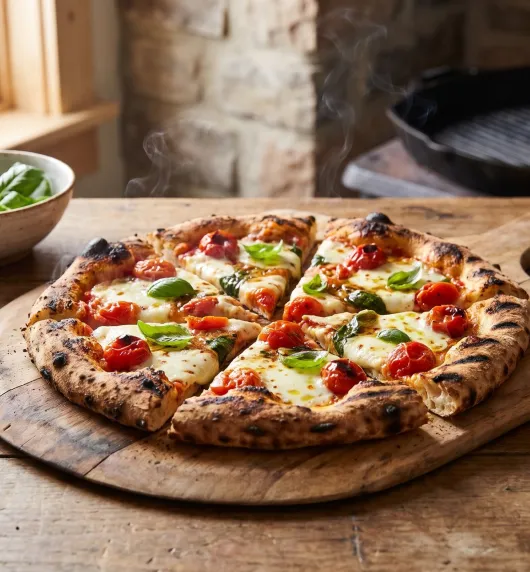
Sourdough Pizza Dough
A chewy, flavorful pizza dough made with an active sourdough starter, flour, water, salt, and olive oil, fermented slowly for a tangy, crisp crust.

Cook this recipe
Sourdough Pizza Dough
Instructions
Mix the starter for pizza dough
Add flour and salt
Knead the dough
Bulk ferment
Divide and cold ferment
Bring to room temperature
Preheat the oven
Shape, top, and bake
Share this recipe
Loved this recipe? Share it with someone who’ll enjoy it.
Cooking guide
Cooking tips and techniques
A good starter for pizza dough is simply an active, bubbly sourdough starter fed 4-8 hours before mixing, combined with flour, water, salt, and olive oil, then left to ferment slowly for deep flavor and a chewy, airy crust. The fermentation time, not extra yeast, is what builds the characteristic tang and open crumb.
Explore more practical ideas in our complete topic guide.
Understanding the Starter for Pizza Dough
The starter for pizza dough acts as the only leavening agent in this recipe, so its strength directly affects how well the dough rises. A starter that has doubled in size and looks domed and bubbly within 4-8 hours of feeding is ready to use. If your starter is sluggish or flat, feed it again and wait until it's active before mixing the dough, since a weak starter leads to a dense, under-risen crust.
Active Starter vs Discard: Which to Use
Active, recently fed starter is the better choice for this dough because it provides reliable rise within the bulk fermentation window. Unfed discard can still be used, but it ferments more slowly and contributes more sourness with less lift, so plan for a longer bulk rise (closer to 6-8 hours) and expect a slightly flatter crust if you substitute discard for active starter.
Fermentation Time and Why It Matters
This dough relies on two fermentation stages: a room-temperature bulk rise and a longer cold ferment in the refrigerator. The bulk rise (4-6 hours) develops structure and gas, while the 12-24 hour cold ferment slows fermentation just enough to build complex flavor without over-proofing. Shorter cold fermentation (closer to 12 hours) gives a milder flavor, while a full 24 hours produces a tangier, more complex crust. Skipping the cold ferment entirely will still produce pizza dough, but the flavor will be noticeably flatter.
Shaping and Baking Tips for a Crisp Crust
Bring the dough to room temperature for 1-2 hours before shaping, since cold dough is stiff and tears easily when stretched. Preheat your oven with a pizza stone or steel for a full 45 minutes so the surface is hot enough to crisp the base quickly. Stretch the dough gently from the center outward rather than rolling it with a pin, which can press out the air bubbles that give the crust its texture. Bake at 500°F (260°C) until the crust is golden and the center is set, usually 8-10 minutes.
Storing and Freezing Sourdough Pizza Dough
Shaped dough balls keep well in the refrigerator for up to 3 days in an oiled, covered container, with flavor continuing to develop the longer they sit. For longer storage, freeze shaped dough balls in airtight bags for up to 3 months; thaw overnight in the refrigerator, then let the dough come to room temperature before shaping. For more freezer and make-ahead strategies across different dough styles, see the make-ahead pizza dough guide.
Helpful answers
Frequently Asked Questions
What is a starter for pizza dough?
It's an active, recently fed sourdough starter used as the sole leavening agent in the dough instead of commercial yeast.
How much sourdough starter do I need for pizza dough?
This recipe uses 1 cup (240g) of active, bubbly starter for 2 pizza dough balls.
Can I use discard starter instead of active starter?
Yes, but unfed discard ferments more slowly and gives a flatter, more sour crust, so plan for a longer bulk rise of 6-8 hours.
How long should sourdough pizza dough ferment?
Bulk ferment for 4-6 hours at room temperature, then cold ferment in the refrigerator for 12-24 hours for the best flavor and texture.
Can I freeze sourdough pizza dough?
Yes, shaped dough balls can be frozen in airtight bags for up to 3 months; thaw overnight in the refrigerator before bringing to room temperature and shaping.
From readers
Reviews
Cooked this? Tell other readers how it went.
Be the first to review this recipe
Keep cooking