
Recipe collection
Homemade Refried Beans: The Complete Guide to Every Style
Refried beans recipe to try: Quick Refried Beans from Canned Beans, Refried Black Beans from Scratch and more, with practical cooking tips.
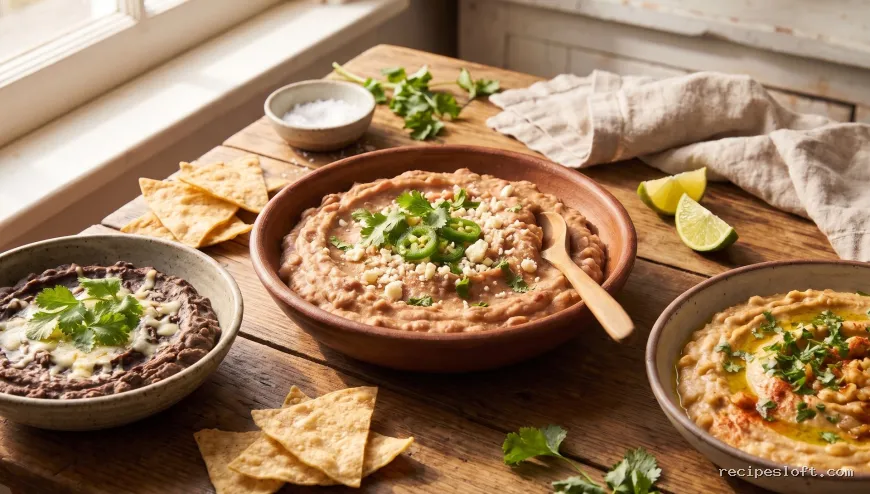
Quick refried beans from canned beans suit weeknight cooking when time is short, while refried black beans from scratch reward a slower pantry-planning session with deeper flavor. Refried kidney beans offer a heartier, slightly sweet bowl, and refried garbanzo beans bring a nuttier, Mediterranean-leaning twist for anyone wanting a distinct variation on the classic dish.
Searching for the right refried beans recipe can feel more complicated than it should be, because "refried beans" actually covers a whole family of dishes that differ by bean type, cooking method, and texture. This guide sorts through those differences so you can land on the version that fits your pantry, your timeline, and the meal you're building around it—whether that's a weeknight taco night or a slow Sunday batch for the freezer.
Use this page as a map, not a single recipe. Below you'll find a framework for choosing between beans, a breakdown of the recipe families we cover in depth, and practical guidance on texture, seasoning, and storage that applies across all of them. Each section links out to a focused recipe built around one bean or one method, so you can go deep once you know which direction to take.
How to Choose the Right Refried Beans Recipe
Before you start cooking, it helps to narrow down three things: the bean you have on hand, how much time you want to spend, and the texture you're after. Most refried beans disappointments trace back to mismatching one of these.
Starting With What You Have
If your pantry already has canned beans, there's no reason to soak and simmer dried ones first. If you're planning ahead and want deeper flavor, starting from dried beans gives you more control over seasoning and texture, though it takes longer. Either path can produce excellent results—the bean and the method matter more than any single trick.
Matching Texture to Purpose
Smooth, almost spreadable beans work best for dips, tortas, and layering into casseroles. A chunkier, rustic mash holds its own as a side dish or taco filling. Decide on your end use first, then mash accordingly—less liquid and more mashing time gives you the spreadable version, while a few quick passes with a fork keeps things coarser.
Considering the Bean's Natural Flavor
Pinto beans give the classic earthy, slightly sweet flavor most people associate with refried beans. Black beans bring a deeper, more mineral note. Kidney beans are heartier and slightly sweeter, while garbanzo beans (chickpeas) shift the dish toward a nuttier, almost Mediterranean-leaning profile. None is more "correct" than another—they're just different starting points.
Recipe Families in This Refried Beans Recipe Collection
Rather than one master recipe, this collection is organized around the beans and methods people search for most. Each linked page focuses on getting one version right.
Quick Refried Beans from Canned Beans
This is the fastest route to the table. Starting from canned beans skips the soaking and long simmer, so you're mashing and seasoning in well under half an hour. It's the method to reach for on a weeknight or when you're building a bigger meal and don't want beans to be the bottleneck. See Quick Refried Beans from Canned Beans for the step-by-step approach.
Refried Black Beans from Scratch
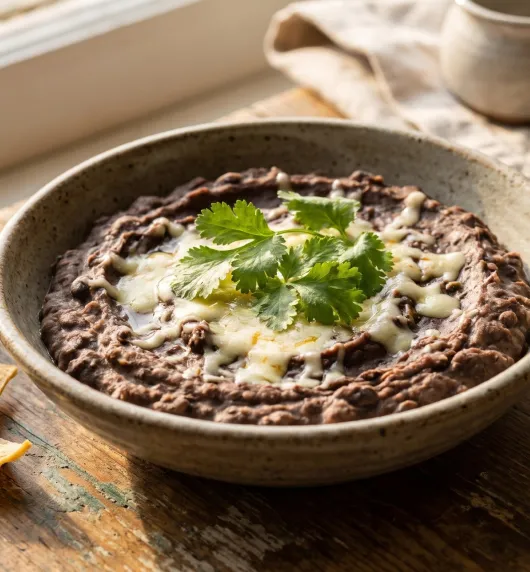
Cooking black beans from dried gives you a deeper, more complex pot of beans than canned can usually offer, since the beans absorb aromatics while they simmer. This method takes planning—soaking and a longer cook time—but rewards you with a richer final dish. Full details live at Refried Black Beans from Scratch.
Refried Kidney Beans
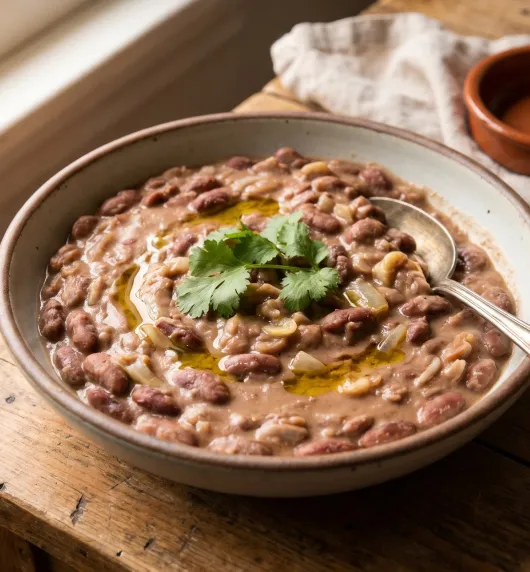
Kidney beans aren't the traditional choice, but their firm texture and slightly sweet flavor hold up well to mashing and frying, producing a heartier bowl than pinto or black beans typically give. If you have kidney beans on hand or want a change of pace, the Refried Kidney Beans page walks through the specifics.
Refried Garbanzo Beans
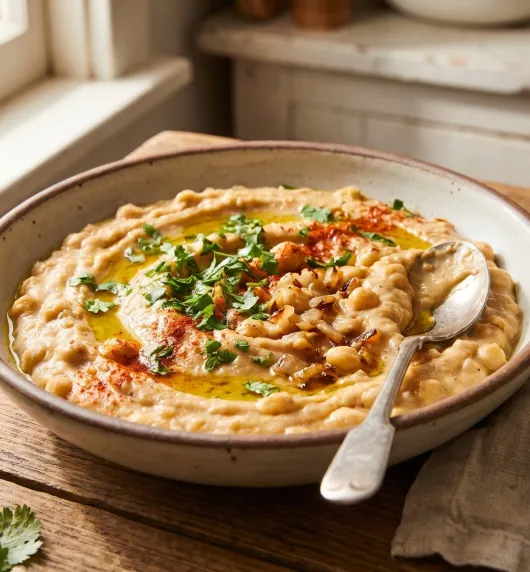
Garbanzo beans (chickpeas) take refried beans in a different direction entirely, with a nuttier flavor and a slightly grainier mash that pairs well with cumin and lemon-forward seasoning. It's a good option if you want something that still functions like refried beans but tastes distinct. Find the complete method at Refried Garbanzo Beans.
Core Techniques That Apply Across Every Version
Building Flavor as You Cook
Whichever bean you start with, sautéing onion and garlic in the cooking fat before adding the beans builds a flavor base that plain mashing can't replicate. A splash of the bean cooking liquid or broth, added gradually while mashing, controls both texture and seasoning at the same time.
Mashing Tools and Texture Control
A potato masher gives you control and a pleasantly rustic texture. A blender or food processor gets you to smooth and spreadable fastest, which is useful for dips or spreading onto tortillas. Add liquid a little at a time in either case—it's much easier to loosen beans than to thicken a pot that's gone too soupy.
Seasoning Without a Single Formula
Cumin, garlic, and a bit of acid (lime juice or vinegar) show up across nearly every version of this dish, but the ratios shift depending on the bean. Black beans can take a bit more heat and acid; kidney and garbanzo beans often taste better with a lighter hand so their natural flavor isn't buried.
Storing and Reheating Refried Beans
Refried beans keep well in an airtight container in the refrigerator for about three to four days. For longer storage, they freeze well for up to a few months—cool completely before freezing, and portion into flat, resealable bags so they thaw quickly. Reheat gently on the stovetop or in the microwave, stirring in a splash of water or broth to restore the original creamy consistency, since beans thicken noticeably as they sit.
Cook next
Recipes in this guide
Explore the recipes that turn this guide into a practical cooking plan.

Helpful answers
Frequently asked questions
What is the difference between refried beans and regular mashed beans?
Refried beans are typically cooked a second time—mashed and then fried or simmered in fat with aromatics—which concentrates flavor and creates a creamier, more cohesive texture than simply mashing cooked beans on their own.
Can I make refried beans without any added fat?
Yes. You can sauté the onion and garlic in a small amount of oil, or use a dry sauté and rely on broth for moisture; the beans will still mash and season well, though the texture may be slightly less rich than a version cooked with more fat.
Do refried beans need to include cheese?
No, cheese is an optional topping or mix-in, not a required part of the base recipe. The beans themselves are typically dairy-free unless you choose to add cheese or a cream-based garnish.
Which bean makes the most traditional-tasting refried beans?
Pinto beans produce the flavor most commonly associated with classic refried beans, but black beans, kidney beans, and garbanzo beans all make valid, tasty versions with their own distinct character.
How can I thicken refried beans that turned out too soupy?
Continue cooking them uncovered over low heat, stirring frequently, which allows excess liquid to evaporate; you can also mash in a few extra cooked beans if you have them on hand to absorb liquid and thicken the mixture. However you arrived here, the right refried beans recipe is the one that matches the bean in your pantry and the texture you need for tonight's meal. Start with the choice framework above, pick the recipe family that fits, and use the storage tips to make the batch stretch across more than one meal.