
Veggie Egg Bake (Easy Make-Ahead Breakfast Casserole)
A baked egg casserole loaded with bell pepper, onion, mushrooms, spinach, cherry tomatoes, and cheddar cheese, perfect for a make-ahead breakfast or brunch.

Cook this recipe
Veggie Egg Bake (Easy Make-Ahead Breakfast Casserole)
Instructions
Preheat the oven and prepare the dish

Sauté the vegetables
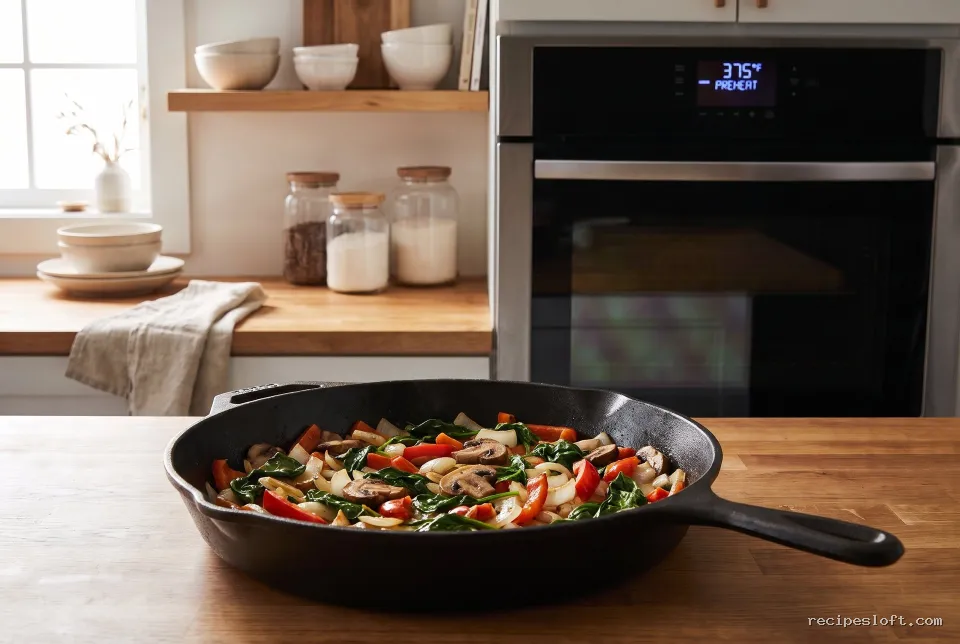
Whisk the eggs
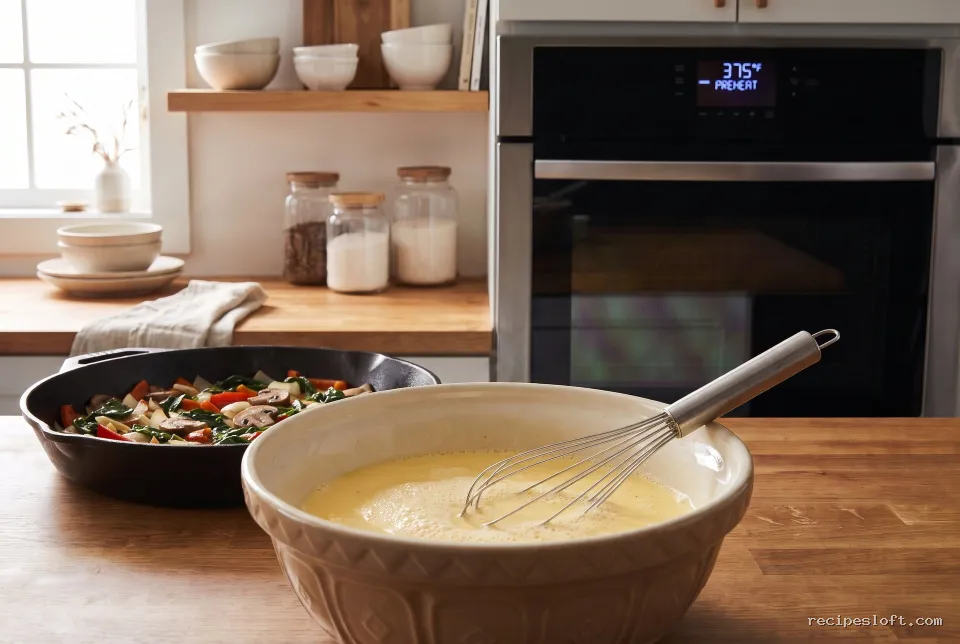
Assemble the bake
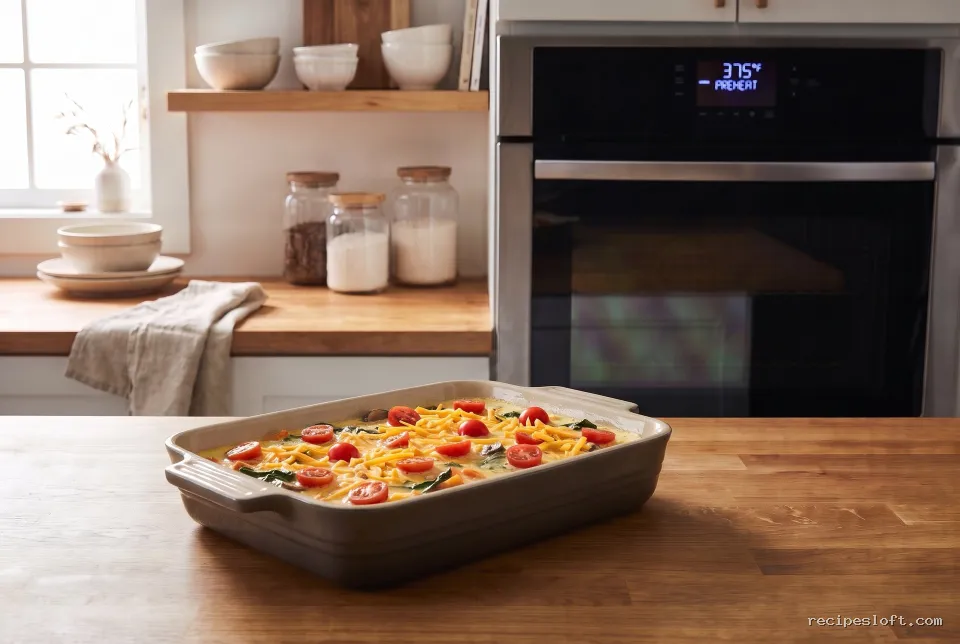
Bake until set

Rest and serve

Share this recipe
Loved this recipe? Share it with someone who’ll enjoy it.
Cooking guide
Cooking tips and techniques
A veggie egg bake is a baked egg casserole made with whisked eggs, milk, sautéed vegetables, and melted cheese, baked in one dish until set. It feeds a crowd, reheats well, and is naturally gluten-free, making it a dependable option for busy mornings or weekend brunch.
What Makes a Good Veggie Egg Bake
The texture of a veggie egg bake depends on the ratio of eggs to milk and how well the vegetables are pre-cooked. Eggs provide structure, milk keeps the crumb soft instead of rubbery, and sautéing vegetables first removes excess water so the final bake sets evenly instead of turning watery in the middle. Cheese adds richness and helps bind the layers as the eggs firm up in the oven.
Best Vegetable and Cheese Swaps for a Veggie Egg Bake
Almost any vegetable works in a veggie egg bake as long as it's cooked down first. Zucchini, broccoli florets, asparagus pieces, or sun-dried tomatoes can replace the bell pepper, mushrooms, or cherry tomatoes with no change to the method. For cheese, Swiss, feta, or a sharp white cheddar all melt well and pair nicely with spinach and onion. If you want a dairy-free version, swap the milk for unsweetened almond or oat milk and use a dairy-free shredded cheese, though the texture will be slightly less creamy.
Preventing a Watery or Rubbery Veggie Egg Bake
The two most common problems with a veggie egg bake are excess liquid pooling at the bottom and overbaked, rubbery eggs. To avoid a watery bake, always sauté high-moisture vegetables like mushrooms, spinach, and tomatoes until their liquid has evaporated before adding them to the dish. To avoid rubbery eggs, pull the casserole from the oven as soon as the center is set but still slightly jiggly, since it will continue to firm up during the rest time. Letting the bake rest for 5 minutes before slicing also helps it hold together instead of falling apart on the plate.
Storing and Reheating Veggie Egg Bake
Store leftover veggie egg bake covered in the refrigerator for up to 4 days. For longer storage, wrap individual slices tightly and freeze for up to 2 months, then thaw overnight in the refrigerator before reheating. When reheating, whether from the fridge or freezer, heat slices in the microwave or a 350°F oven until they reach 165°F (74°C) internal temperature, checked with an instant-read thermometer, to ensure they're heated through safely.
Serving Ideas for Your Veggie Egg Bake
Serve a veggie egg bake warm, cut into squares, alongside toast, fresh fruit, or a simple green salad for a complete brunch spread. It also holds up well as a make-ahead breakfast: bake it the night before a gathering, refrigerate, and reheat individual portions as guests arrive. For more make-ahead breakfast options and troubleshooting tips, see the full breakfast casserole recipes.
Safe internal temperatures in this recipe follow the FoodSafety.gov safe minimum internal temperature chart.
Helpful answers
Frequently Asked Questions
Can I make a veggie egg bake ahead of time?
Yes, you can bake it a day ahead, refrigerate it covered, and reheat individual slices to 165°F (74°C) before serving.
Can I freeze veggie egg bake?
Yes, wrap cooled slices tightly and freeze for up to 2 months; thaw overnight in the refrigerator before reheating to 165°F (74°C).
Can I use different vegetables?
Yes, zucchini, broccoli, asparagus, or sun-dried tomatoes can replace the vegetables in this recipe as long as they are sautéed first to remove excess moisture.
How do I know when the egg bake is done?
The center should be set but still slightly jiggly, and it should reach an internal temperature of 160°F (71°C) on an instant-read thermometer.
From readers
Reviews
Cooked this? Tell other readers how it went.
Be the first to review this recipe
Keep cooking
Related recipes and guides

Recipe collection
Breakfast Casserole Recipes: A Complete Guide
Breakfast casserole recipes for every morning: hash brown, tater tot, make-ahead, Christmas, crescent roll and veggie egg bakes, with storage tips.

Hashbrown Breakfast Casserole
