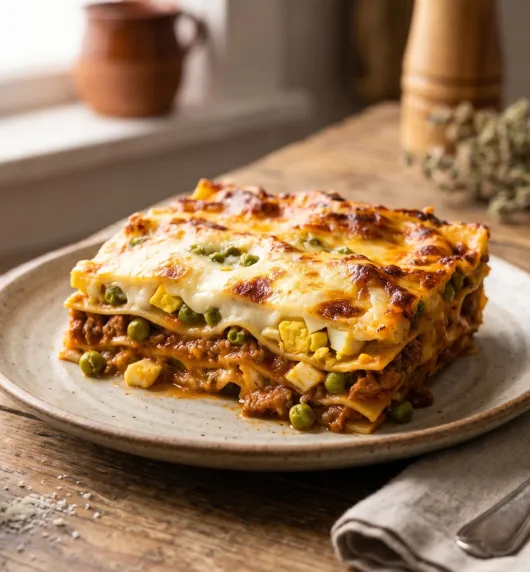
Lasagna with Fresh Pasta Sheets
A rich, home-style lasagna made with fresh pasta sheets layered between a savory ground beef sauce and creamy béchamel, baked until golden and bubbling without any pre-boiling of the noodles.
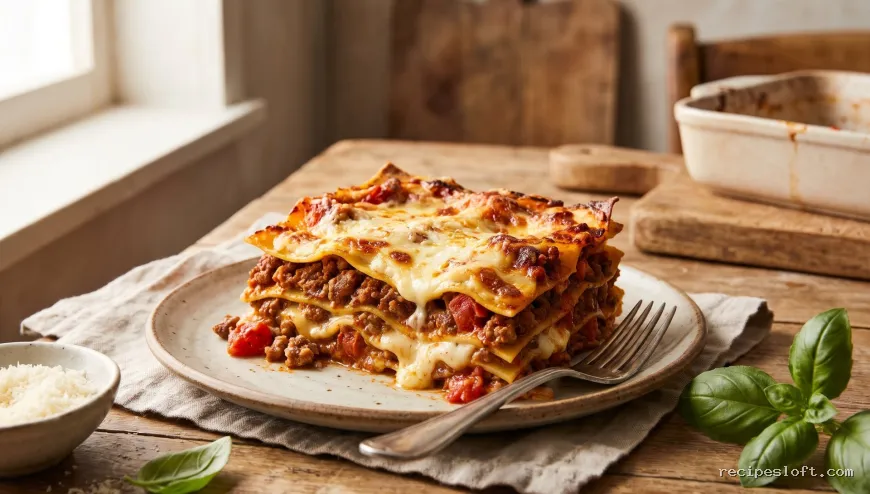
Cook this recipe
Lasagna with Fresh Pasta Sheets
Instructions
Cook the meat sauce
Make the béchamel
Preheat the oven
Assemble the lasagna
Bake covered
Bake uncovered
Rest and serve
Share this recipe
Loved this recipe? Share it with someone who’ll enjoy it.
Cooking guide
Cooking tips and techniques
This lasagna fresh pasta sheets recipe skips the boiling step entirely, relying on the pasta's natural moisture and a well-sauced bake to turn tender in the oven. The result is a silkier, less chewy lasagna than versions made with dried noodles, ready in about 70 minutes total.
What Makes Lasagna Fresh Pasta Sheets Different From Dried Noodles
Fresh pasta sheets are thinner, more porous, and already partially hydrated, so they absorb sauce as they bake instead of needing a pre-boil. This changes two things: the bake needs slightly more sauce moisture to fully soften the sheets, and the final texture is softer and more delicate than the firmer bite you get from dried, boiled noodles. Fresh sheets also cook faster, so they're less forgiving if the dish bakes too long — watch for golden, bubbling edges rather than relying on a fixed clock.
Choosing and Preparing Fresh Pasta Sheets for Lasagna
Use refrigerated fresh lasagna sheets straight from the package; there's no need to cook, soak, or even rinse them first. If the sheets are larger than your baking dish, trim them with a knife or kitchen shears rather than overlapping heavily, since thick overlaps won't soften evenly. If you only have fresh pasta in sheet rolls rather than pre-cut rectangles, cut them to size and layer them flat with a light dusting of flour between layers to prevent sticking before you're ready to assemble.
Avoiding a Watery or Dry Lasagna with Fresh Pasta
The most common problem with fresh noodles is an undercooked, gummy center, which usually means not enough sauce moisture reached the inner layers. Make sure both the meat sauce and the béchamel are spread in a thin, even layer over every sheet, including the top layer, and don't skimp on sauce at the edges of the dish where sheets touch the pan. If your lasagna turns out watery instead, let the meat sauce simmer longer before assembling so it thickens properly, and always let the baked lasagna rest for at least 10 minutes before cutting so the layers set.
Storing and Reheating Lasagna with Fresh Pasta Sheets
Baked lasagna with fresh pasta sheets keeps well in an airtight container in the refrigerator for up to 4 days. Reheat individual portions in the microwave or a covered oven-safe dish until the center reaches 165°F (74°C) on an instant-read thermometer. For longer storage, you can freeze baked and cooled lasagna for up to 3 months; thaw it in the refrigerator overnight before reheating to the same safe internal temperature.
Serving Ideas for Fresh Pasta Lasagna
Let the lasagna rest before slicing so the fresh pasta layers hold together cleanly instead of sliding apart. A simple green salad and crusty bread balance the richness of the béchamel and cheese, and a light sprinkle of fresh basil or extra Parmesan over each slice adds a fresh finish. If you'd rather work with a ricotta-based filling instead of béchamel, the lasagna recipe with ricotta cheese guide walks through that version step by step.
Safe internal temperatures in this recipe follow the FoodSafety.gov safe minimum internal temperature chart.
Helpful answers
Frequently Asked Questions
Do I need to boil fresh lasagna sheets before baking?
No, fresh pasta sheets go into the dish uncooked and soften fully in the oven as they absorb moisture from the meat sauce and béchamel.
Can I use dried lasagna noodles instead of fresh?
Yes, but dried noodles need to be boiled (or use an oven-ready variety) before layering, since they won't soften the same way fresh pasta does.
Why is my lasagna with fresh pasta watery or undercooked?
This usually means the sauce wasn't spread evenly over every layer or the meat sauce wasn't simmered long enough to thicken; make sure sauce coats each sheet fully, especially at the edges.
How long does lasagna with fresh pasta sheets keep in the fridge?
It keeps well in an airtight container in the refrigerator for up to 4 days, and reheated portions should reach 165°F (74°C) before serving.
From readers
Reviews
Cooked this? Tell other readers how it went.
Be the first to review this recipe
Keep cooking