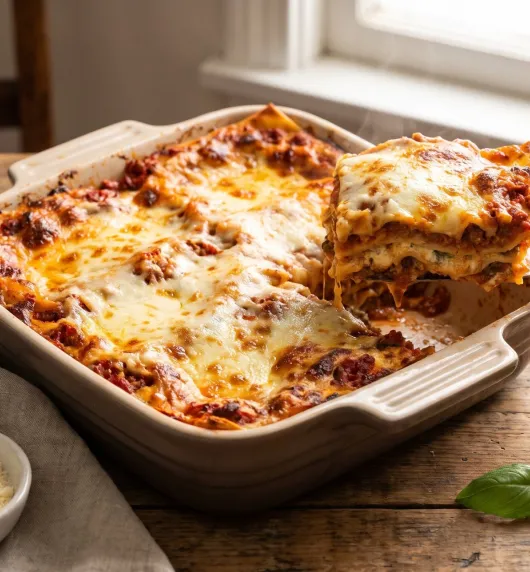
Sicilian Lasagna with Beef Ragù, Peas, and Hard-Boiled Eggs
Layers of lasagna noodles with a rich beef ragù, peas, creamy béchamel, mozzarella, and chopped hard-boiled eggs, baked until bubbling and golden.
Cook this recipe
Sicilian Lasagna with Beef Ragù, Peas, and Hard-Boiled Eggs
Instructions
Cook the noodles
Boil the eggs
Brown the beef and beef sausage
Simmer the ragù
Make the béchamel sauce
Assemble the layers
Bake
Rest and serve
Share this recipe
Loved this recipe? Share it with someone who’ll enjoy it.
Cooking guide
Cooking tips and techniques
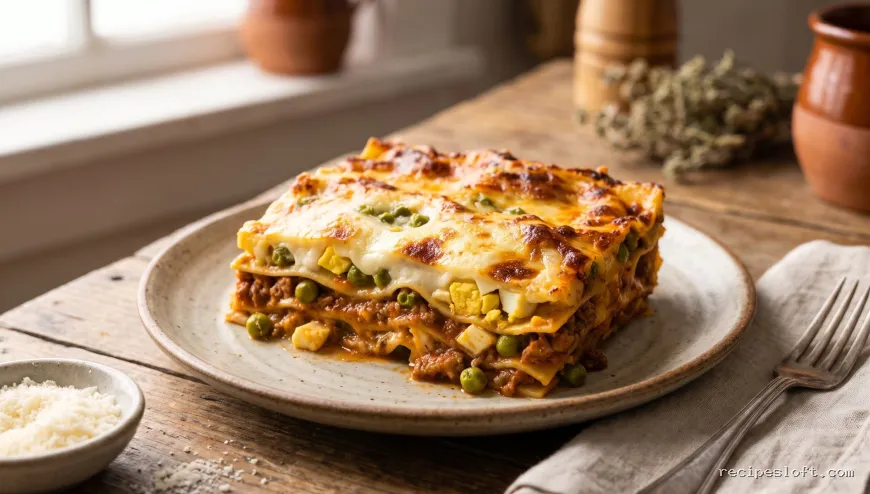
Sicilian lasagna is a baked pasta dish built from layers of beef ragù with peas, a creamy béchamel sauce, melted mozzarella, and chopped hard-boiled eggs instead of the ricotta used in many other Italian-American versions. It bakes into a rich, savory casserole with a firmer, meatier bite than ricotta-style lasagna.
What Makes Sicilian Lasagna Different From Classic Lasagna with Ricotta
Sicilian lasagna skips the ricotta layer entirely and replaces it with béchamel sauce, which is a milk-and-butter sauce thickened with flour rather than a cheese filling. The ragù also includes peas and the dish is finished with chopped hard-boiled eggs tucked between the layers, giving it a texture and flavor profile distinct from a ricotta-based bake. If you prefer the familiar cheese-forward version, our lasagna recipe with ricotta cheese guide covers that style step by step.
Key Ingredients in Sicilian Lasagna and How They Behave
Each component plays a specific role in the final texture of the bake. Ground beef and beef sausage build a dense, well-seasoned ragù, while frozen peas added near the end of simmering keep their color and a slight bite instead of turning mushy. Béchamel sauce binds the layers together and keeps the lasagna moist without the graininess ricotta can sometimes bring, and chopped hard-boiled eggs add richness and a soft, custardy contrast against the firmer meat sauce and noodles.
Substitutions and Swaps for Sicilian Lasagna
Several swaps work well without changing the character of the dish. Ground beef alone can replace the beef sausage if you prefer a milder flavor, and beef broth can stand in for any liquid used to deglaze the pan while simmering the ragù. Fresh peas can replace frozen ones if blanched briefly first, and no-boil lasagna noodles can be used in place of boiled ones as long as you add a little extra béchamel to each layer so the noodles have enough liquid to soften while baking.
Preventing a Watery or Bland Sicilian Lasagna
Most texture problems come down to moisture control and seasoning balance. Simmer the ragù uncovered until it thickens enough to hold its shape on a spoon, since a thin sauce will make the finished bake watery. Pat chopped hard-boiled eggs dry before layering, season the béchamel generously with salt, pepper, and a touch of nutmeg since milk-based sauces mute seasoning, and always let the baked lasagna rest for about 15 minutes before cutting so the layers set instead of sliding apart.
Storing and Reheating Sicilian Lasagna
Cooked Sicilian lasagna keeps well for later meals when stored properly. Refrigerate leftovers in an airtight container for up to 3-4 days, or wrap individual portions tightly and freeze for up to 2-3 months. When reheating, whether from the refrigerator or freezer, heat leftovers until they reach an internal temperature of 165°F (74°C) on an instant-read thermometer before serving.
Serving Sicilian Lasagna for Holidays and Gatherings
This lasagna's sturdy layers and make-ahead-friendly structure make it a good fit for holiday tables and larger family meals. It pairs well with a simple green salad and crusty bread to balance the richness of the béchamel and ragù, and it can be assembled a day in advance, refrigerated unbaked, and baked just before serving so it comes to the table hot and freshly bubbling.
Safe internal temperatures in this recipe follow the FoodSafety.gov safe minimum internal temperature chart.
Helpful answers
Frequently Asked Questions
What makes Sicilian lasagna different from classic lasagna with ricotta?
Sicilian lasagna uses béchamel sauce instead of ricotta and adds peas to the beef ragù along with chopped hard-boiled eggs layered between the noodles, giving it a richer, firmer texture than a ricotta-based bake.
Can I make Sicilian lasagna ahead of time?
Yes, you can assemble the full lasagna up to a day in advance, cover it tightly, and refrigerate it unbaked, then bake it just before serving, adding a few extra minutes to the covered baking time since it will start cold.
Can I freeze Sicilian lasagna?
Yes, baked and cooled Sicilian lasagna can be wrapped tightly and frozen for up to 2-3 months; thaw it in the refrigerator overnight and reheat portions to 165°F (74°C) before serving.
What can I substitute for hard-boiled eggs in Sicilian lasagna?
If you'd rather skip the chopped hard-boiled eggs, you can simply omit them and add a little extra béchamel and mozzarella to each layer to keep the lasagna moist.
From readers
Reviews
Cooked this? Tell other readers how it went.
Be the first to review this recipe
Keep cooking