
Recipe collection
Easy Rice Pilaf (Fluffy Every Time)
Rice pilaf recipe to try: Basmati Rice Pilaf, How to Cook Wild Rice, Mexican Rice with Salsa and Orange Rice, with practical cooking tips.
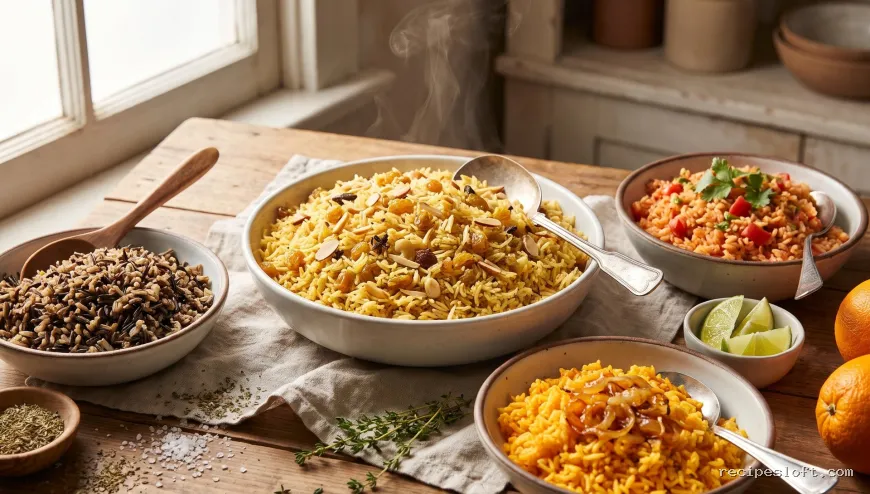
A fragrant basmati pilaf suits roasted or grilled proteins when you want a light, neutral side, while a quick white or basmati base works best if you're short on time. Wild rice fits meal-prepping ahead since it reheats well, Mexican rice with salsa pairs naturally with Tex-Mex meals, and orange rice brightens roasted poultry or fish.
Searching for a reliable rice pilaf recipe usually means you've had one too many pots of gummy, clumped, or mushy rice and you want a method that actually works on a weeknight. This guide is for anyone who wants to understand the technique behind pilaf — toasting, measuring liquid, and resting the pot — so that any variation you try turns out light and separate, not just one single recipe memorized by rote.
Use this page as a map. Below you'll find a simple framework for choosing which style of pilaf fits your meal, a breakdown of the rice families this site covers, and storage advice that applies across all of them. When you're ready for a specific version, follow the links into the full recipes for basmati rice pilaf, wild rice, Mexican rice with salsa, and orange rice.
How to Choose the Right Rice Pilaf for Your Meal
Not every pilaf behaves the same way, because the rice itself and the liquid-to-grain ratio change the texture and flavor. Think about three things before you pick a version: the main dish it's accompanying, how much hands-on time you have, and whether you want a neutral side or one with its own bold flavor.
Matching Pilaf to the Main Course
A fragrant, lightly spiced pilaf works well alongside roasted or grilled proteins where you don't want to compete with other seasonings. A more assertive, flavor-forward rice — like one built on tomatoes, citrus, or herbs — is better when the rest of the plate is simple, such as grilled chicken or fish with a quick vegetable side.
Matching Pilaf to Your Time and Equipment
Some rice varieties cook in well under 20 minutes once toasted, while others, like wild rice, need a longer simmer because of their tougher outer husk. If you're short on time, a quick-cooking white or basmati base is the easier choice; if you're meal-prepping ahead, a longer-cooking grain reheats beautifully and can be made a day in advance.
The Rice Pilaf Recipe Families in This Collection
Pilaf isn't one dish — it's a technique applied to many kinds of rice and flavor profiles. Here's how the recipes in this collection differ from one another, so you can jump straight to the one that fits what you're craving.
Basmati Rice Pilaf
Basmati is prized for its long, slender grains that stay separate and fluffy rather than sticking together, making it a natural fit for a classic, aromatic pilaf. If you want the traditional version with warm spices and a light, fragrant finish, see the full Basmati Rice Pilaf recipe.
How to Cook Wild Rice
Wild rice is technically a grass seed rather than true rice, and it needs a different water ratio and longer cook time to soften its chewy outer layer. It brings a nutty, earthy flavor and a pleasant bite, which makes it a good choice when you want texture contrast on the plate. Walk through the method in How to Cook Wild Rice.
Mexican Rice with Salsa
This style swaps a plain broth base for a tomato-forward liquid, giving the rice color, tang, and a built-in flavor boost that pairs naturally with Tex-Mex or Southwestern meals. Get the full method in Mexican Rice with Salsa.
Orange Rice
Citrus juice and zest brighten a simple rice pilaf, turning it into a fragrant side that works especially well next to roasted poultry or fish. See how it comes together in Orange Rice.
The Core Technique Behind Every Good Rice Pilaf Recipe
Despite their differences, all four recipes above rely on the same underlying steps. Understanding these will help you troubleshoot any pilaf, even ones not listed here.
Toasting the Rice First
Briefly cooking the rice in fat before adding liquid coats each grain, which helps it stay separate instead of clumping as it absorbs moisture. This step also deepens the rice's flavor slightly, giving the finished dish a nuttier background taste.
Getting the Liquid Ratio Right
Too much liquid leads to mushy rice; too little leaves it undercooked and dry in spots. Because different rice varieties absorb water differently, it's worth following the specific ratio given in each recipe rather than assuming one ratio works for every grain.
Letting It Rest Before Fluffing
Pulling the lid off the second the liquid is absorbed and digging in with a spoon is one of the most common reasons pilaf turns gummy. Letting the pot sit off the heat, covered, for several minutes allows the steam to finish evening out, so when you do fluff it with a fork, the grains separate cleanly.
Preparing and Storing Rice Pilaf
Pilaf is a convenient make-ahead side because it holds its texture reasonably well in the refrigerator and reheats without much fuss.
Make-Ahead Tips
You can cook most pilaf varieties a day or two ahead and store them in an airtight container once fully cooled. Add any fresh herbs or citrus zest just before serving rather than during storage, since their flavor and color fade over time.
Reheating Without Drying It Out
A splash of broth or water stirred in before reheating helps rehydrate the grains, whether you're using a microwave or a covered pot on the stove. Fluff the rice again with a fork after reheating to restore its texture.
Cook next
Recipes in this guide
Explore the recipes that turn this guide into a practical cooking plan.


How to Cook Wild Rice (Stovetop Method)

Easy Mexican Rice with Salsa

Orange Rice (Easy Citrus Rice Side Dish)
Helpful answers
Frequently asked questions
What's the difference between rice pilaf and plain steamed rice?
Plain steamed rice is simmered in water with no additional steps, while pilaf involves toasting the rice in fat before cooking it in a flavored liquid, which changes both its texture and taste.
Can I use any type of rice for a pilaf recipe?
Most long-grain rice varieties work well because they stay separate after cooking, but the exact liquid amount and cook time will vary by type, so it's best to follow a recipe suited to the specific rice you're using.
Why does my rice pilaf turn out mushy?
Mushy pilaf usually comes from using too much liquid, skipping the toasting step, or stirring the rice while it cooks, which releases starch and causes clumping.
Do I need a lid to cook rice pilaf properly?
Yes, a tight-fitting lid traps steam so the rice cooks evenly in the liquid it absorbs; without one, too much moisture escapes and the rice can cook unevenly.
How long does cooked rice pilaf keep in the refrigerator?
Stored in an airtight container, most cooked rice pilaf keeps well for a few days in the refrigerator, though exact storage time can vary depending on the specific ingredients used.