Summer Skillet Lasagna
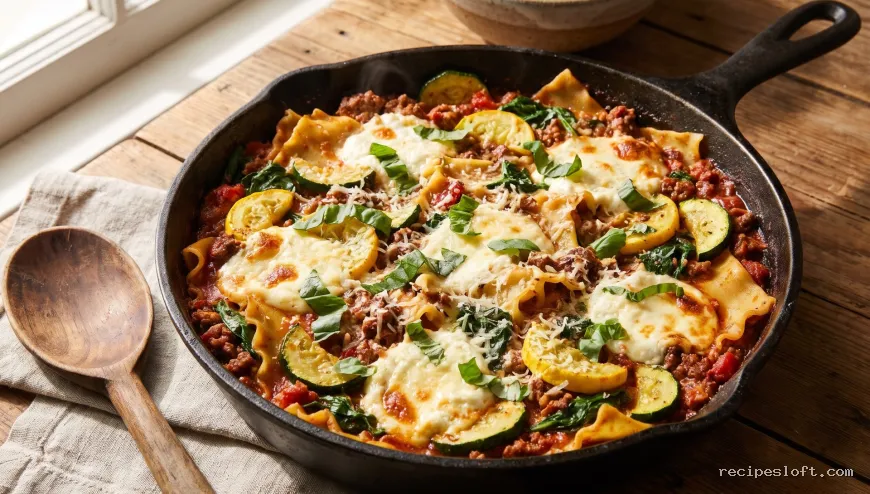
A one-pan stovetop lasagna loaded with zucchini, yellow squash, spinach, ground beef, and melted ricotta, mozzarella, and Parmesan cheese, ready in about 45 minutes without the oven.
Cook this recipe
Summer Skillet Lasagna
Instructions
Cook the onion
Brown the ground beef
Add garlic and vegetables
Build the sauce
Cook the noodles in the sauce
Wilt the spinach
Melt the cheeses
Rest and serve
Share this recipe
Loved this recipe? Share it with someone who’ll enjoy it.
Cooking guide
Cooking tips and techniques
Summer skillet lasagna is a stovetop version of classic lasagna that cooks in one pan in about 45 minutes, layering ground beef, zucchini, yellow squash, and spinach with broken noodles, ricotta, and melted mozzarella instead of baking in the oven.
What Makes Summer Skillet Lasagna Different from Oven-Baked Lasagna
The main difference is that the noodles cook directly in the sauce on the stovetop instead of being layered and baked, which cuts the total time roughly in half and skips heating the oven on a hot day. Broken lasagna noodles simmer right in the marinara and water until tender, then ricotta and mozzarella are added at the end and melted under a lid rather than browned in the oven. If you want the traditional layered, baked version with a classic ricotta filling, see our lasagna recipe with ricotta cheese guide.
Choosing and Prepping Summer Vegetables for Skillet Lasagna
Zucchini and yellow squash work well in summer skillet lasagna because they soften quickly and don't need pre-cooking. Dice them into small, even pieces so they cook through in the same 4 minutes it takes the garlic to turn fragrant, and avoid cutting them too large or they'll stay firm while the noodles finish. Fresh spinach is stirred in at the end just until wilted; if you only have frozen spinach, thaw and squeeze it dry first so it doesn't water down the sauce.
Swaps and Substitutions for Summer Skillet Lasagna
Ground turkey or ground chicken can replace ground beef in this recipe with no other changes needed, as long as it's cooked to a safe internal temperature. Cottage cheese can stand in for ricotta if you prefer a lighter filling, and a blend of other summer vegetables such as diced bell pepper or corn kernels can be added alongside the zucchini and squash. Broken lasagna noodles are easiest to measure and stir, but you can substitute broken fettuccine or broad egg noodles if that's what you have on hand; just check doneness a few minutes early since shapes vary in thickness.
Preventing Mushy Noodles in Summer Skillet Lasagna
The most common issue with summer skillet lasagna is overcooked, mushy noodles, which happens when the sauce is too thin or the noodles sit uncovered too long. Keep the noodles fully submerged in the sauce while they simmer, stir occasionally so they don't clump or stick to the bottom, and start checking for tenderness a couple of minutes before the recipe's suggested time. If the sauce looks too thick before the noodles are tender, add a splash more water; if it's too thin once the noodles are done, let it simmer uncovered for a minute or two before adding the cheese.
Storing and Reheating Summer Skillet Lasagna
Leftover summer skillet lasagna keeps well in an airtight container in the refrigerator for up to 3 days. Reheat individual portions in a covered skillet over low heat or in the microwave, stirring partway through, until the dish reaches 165°F (74°C) all the way through. This dish is best stored without extra garnish; add fresh basil only after reheating so it doesn't wilt and discolor in storage.
Safe internal temperatures in this recipe follow the FoodSafety.gov safe minimum internal temperature chart.
Helpful answers
Frequently Asked Questions
Can I make summer skillet lasagna without an oven?
Yes, this entire recipe is cooked on the stovetop in one skillet from start to finish, with no oven needed.
What noodles work best for summer skillet lasagna?
Regular lasagna noodles broken into roughly 2-inch pieces work well because they cook evenly in the sauce; broken fettuccine or broad egg noodles can be substituted if needed.
Can I use ground turkey instead of ground beef?
Yes, ground turkey or ground chicken can replace ground beef; just make sure it's cooked to a safe internal temperature of 165°F (74°C) since it's poultry.
How do I store and reheat leftovers?
Store leftovers in an airtight container in the refrigerator for up to 3 days, and reheat in a covered skillet or the microwave until the dish reaches 165°F (74°C) throughout.
From readers
Reviews
Cooked this? Tell other readers how it went.
Be the first to review this recipe
Keep cooking