
Recipe collection
Never-Fail Pie Crust (Flaky All-Butter Recipe)
Never fail pie crust recipe to try: Deep-Dish Pumpkin Pie, Mixed Berry Pie (Fresh or Frozen Berries) and more, with practical cooking tips.
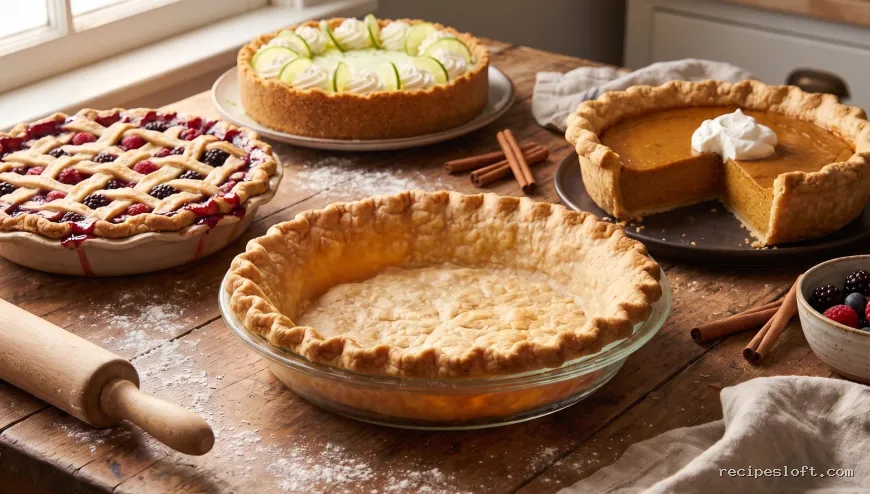
A never-fail pie crust means choosing the right approach for the pie at hand: an all-butter dough for the richest flavor and most flake, a butter-and-shortening blend for a sturdier, easier-to-handle shell, deep-chilled crusts for custard-style pumpkin pie, vented lattice tops for juicy berry pies, and a fully baked, cooled shell for no-bake fillings like key lime.
A never fail pie crust recipe is the one piece of kitchen know-how that turns an occasional pie baker into someone who makes pie on purpose, not just when courage strikes. This guide is for anyone who has watched a crust crack, shrink, or turn gummy and wants to understand why, so the next attempt actually works. Whether you are rolling out dough for a holiday centerpiece or a weeknight fruit pie, the goal here is the same: a tender, flaky shell you can trust every time.
Use this page as your home base. Below you will find the reasoning behind a reliable all-butter dough, how to choose between crust styles, and how the technique connects to the specific pies in this collection. Read the framework once, then come back to it whenever a new filling or crust question comes up.
What Makes a Pie Crust "Never Fail"
Most crust failures trace back to three things: dough that got too warm, too much flour worked in during rolling, or not enough resting time before baking. A dependable method controls all three. Cold butter cut into pea-sized pieces, a light hand with water, and a rest in the refrigerator before rolling are the non-negotiables that separate a flaky crust from a tough one.
Why Butter Matters
Butter brings flavor and, just as importantly, water content. As that water turns to steam in the oven, it pushes layers of dough apart, creating flake. Keeping the butter cold until the moment it hits the oven is what preserves those layers instead of melting them into the flour too early.
Why Resting the Dough Is Not Optional
A short rest lets the flour fully hydrate and the gluten relax, so the dough rolls out smoothly instead of snapping back or tearing. Skipping this step is one of the most common reasons a crust shrinks dramatically once it hits the oven.
Choosing the Right Crust for Your Pie
Not every pie needs the same crust treatment. Some benefit from a sturdier base, others from maximum flake, and some call for a par-baked shell to avoid a soggy bottom. A few supporting guides in this collection walk through specific approaches worth knowing.
All-Butter vs. Combination Fat
An all-butter dough delivers the richest flavor and the most pronounced flake, but it can be slightly more sensitive to temperature while rolling. If you want a bit more structure and forgiveness, the butter and shortening pie crust approach blends the best of both: flavor from butter and a more tender, easier-to-handle texture from shortening.
A Simpler Ratio Method
If you prefer to work from memory rather than a strict recipe card, the 3-2-1 pie crust method is built on an easy ratio of flour, fat, and water. It is a useful variation to learn once you understand the core technique, since it reinforces the same cold-fat, light-hand principles in a format you can scale by eye.
Matching Crust to Filling
A great crust still needs the right filling to shine, and the balance of moisture, acidity, and bake time in a filling affects how the crust should be prepared and blind-baked, if at all.
Deep, Spiced, and Custard-Style Fillings
Custard-based pies like a deep-dish pumpkin pie need a crust that can hold its shape through a long, slow bake without becoming soggy under a wet filling. A slightly thicker edge and a well-chilled shell help it stand up to the extra volume.
Juicy Fruit and Berry Fillings
Fruit pies release a lot of liquid as they bake, so the crust benefits from a lattice or a well-vented top to let steam escape. This matters for a mixed berry pie made with fresh or frozen berries, a blackberry peach pie, or any pie built around a prepared berry pie filling, where getting the thickening right keeps the crust from turning soft underneath.
No-Bake and Chilled Fillings
Some pies only need the crust itself to be fully baked ahead of time, since the filling sets in the refrigerator rather than the oven. A key lime pie with cream cheese is a good example: the crust is baked and cooled completely before the filling goes in, so a sturdy, fully golden shell matters more than steam-driven flake.
Step-by-Step Technique Overview
Mixing the Dough
Combine flour and salt, then cut in cold, cubed butter until the mixture looks like coarse crumbs with some larger pea-sized pieces remaining. Those larger pieces are intentional; they melt into pockets of steam that create flake.
Adding Liquid
Add ice water a tablespoon at a time, tossing gently with a fork rather than stirring hard. Stop as soon as the dough holds together when pressed; overworking it at this stage is what leads to a tough, dense crust.
Chilling and Rolling
Shape the dough into a disk, wrap it, and chill for at least an hour before rolling. Roll from the center outward on a lightly floured surface, turning the dough a quarter turn between rolls to keep an even thickness and a round shape.
Storage and Make-Ahead Tips
Pie dough freezes well, which makes it practical to prepare in advance. Wrap a disk tightly in plastic, then in a freezer bag, and it will keep well in the freezer for future baking. Thaw it in the refrigerator overnight before rolling. A rolled-out, unbaked crust in a pie plate can also be wrapped and frozen directly, which is convenient when you know a pie is coming up on the calendar and want to save time on the day you bake.
Bringing It All Together
A dependable never fail pie crust recipe comes down to a handful of consistent habits: cold fat, a light touch with liquid, and patience during resting and rolling. Once that foundation feels familiar, it becomes the starting point for every pie in this collection, from a spiced pumpkin custard to a bright, chilled citrus filling. Pick a filling that sounds good this week, apply the technique above, and let the crust do its job.
Cook next
Recipes in this guide
Explore the recipes that turn this guide into a practical cooking plan.


Butter and Shortening Pie Crust


Blackberry Peach Pie

Key Lime Pie with Cream Cheese
Helpful answers
Frequently asked questions
Why does my pie crust shrink in the oven?
Shrinking usually happens when the dough was stretched while being fitted into the pan, or when it did not get enough resting time before baking. Letting the shaped crust rest in the refrigerator for at least 20 to 30 minutes before it goes into the oven allows the gluten to relax so the shape holds.
Can I make pie crust ahead of time?
Yes. Pie dough can be made several days ahead and kept refrigerated, or frozen for longer storage as described above. Preparing it ahead also gives the dough plenty of time to fully chill, which often improves the final texture.
Why is my crust tough instead of flaky?
A tough crust is almost always the result of overworking the dough, either by over-mixing after the water is added or by rolling it out too many times. Handling the dough as little as possible, and keeping the butter cold throughout, are the two most reliable fixes.
Do I need to blind bake the crust?
It depends on the filling. Fillings that bake fully inside the crust, like a deep custard pie, usually do not require a fully pre-baked shell, though a partial blind bake can help prevent a soggy bottom. Fillings that are added after baking, such as a chilled or no-bake filling, require the crust to be completely baked and cooled first.
What is the best fat to use for a flaky crust?
All-butter dough gives the richest flavor and most noticeable flake, while a combination of butter and shortening offers a bit more ease when rolling and shaping. Both approaches rely on the same core principle of keeping the fat cold until baking.